Why “Everything Happens for a Reason” Isn’t in My Vocabulary
People say it kindly. I don’t think the people who’ve said it to me over the years meant anything other than to comfort me. But “everything happens for a reason” has never matched my experience of faith, suffering, or the years since a spinal cord injury changed my life — and I ceased pretending otherwise a long time ago.
Where “everything happens for a reason” actually comes from
I was raised with a fairly thin, inherited version of faith — the kind you absorb rather than examine. Somewhere in that background was an unstated assumption that difficult things happen as part of a plan, that there’s a reason sitting behind every hard thing, waiting to be discovered if you’re patient or faithful enough.
I don’t think that’s what most people mean when they say it to me now. Usually it’s said in a hospital corridor or after hearing part of the story for the first time, as a way of imposing some order on something that otherwise looks like pure bad luck. It’s an attempt to make suffering make sense. I understand the impulse. I don’t think it survives contact with the experience of suffering.
Why “everything happens for a reason” never sat right with me
A branch fell onto a particular spot where I happened to be standing one afternoon. I’ve turned that fact over more times than I can count, and I’ve never found a reason sitting underneath it. Not one that holds up, anyway. Not one I’d wish on anyone as an explanation for their own suffering.
What I have found is this: meaning wasn’t waiting there to be discovered. It had to be built, slowly, out of what came after — the rehabilitation, the relationships that changed, the faith that eventually grew back stronger than the version I started with. That’s a very different claim from “this happened for a reason.” It’s closer to: this happened, and here is what I chose to do with it.
Reason versus randomness — and why I don’t think everything happens for a reason
But I’ve come to see a real difference between a God who causes harm on purpose and a God who is with me inside harm that just happens — in a world where trees fall, and timing can be catastrophic.
That distinction matters more than it might sound. One version asks me to believe my injury was assigned to me for a purpose I’m meant to uncover eventually. The other asks something smaller and, I think, more honest: that I wasn’t left to face it alone, and that whatever meaning exists now is something I had a hand in making.
What I say instead now
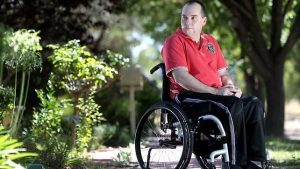
I don’t reach for “everything happens for a reason” anymore, for myself or for anyone else. If someone I care about is in the middle of something hard, I’m far more likely to say something closer to: this is genuinely hard, and I don’t think you need a reason for it to be worth getting through. Sometimes just being present matters more than any explanation could.
There’s a verse in the Book of Job — chapter 19, verse 7 — that remained with me during the early days in hospital: a cry that goes essentially unanswered, a sense of calling out into silence and getting nothing back. I didn’t find that verse comforting because it resolved anything. I found it comforting because it was honest about what unanswered suffering actually feels like, without rushing to explain it away.
Where I’ve landed
I’m not writing a memoir that argues suffering has a hidden design I’ve since uncovered. I’m writing about what it took to keep believing anything at all while living through it, and what changed, slowly, in how I carried the hard days once I did. That’s a harder story to tell than “everything happens for a reason,” but it’s the true one.
About the book
Alive and Not Kicking is my memoir — is my memoir — the story of what happened before, during and after 11 September 2009, when a falling tree branch left me paralysed. It’s not a story about overcoming my health issues. It’s a story about living with them: disability, chronic pain, institutional failures, family strain, humour that showed up in the worst moments, and a faith that grew slowly, through honest questions rather than easy answers.
The book is coming in mid-2027. If any of this is familiar — living with a spinal cord injury, helplessness, disappointment, a faith that’s been tested rather than confirmed — I wrote it for you.
Join the mailing list at alive-and-not-kicking.com, and I’ll send you part of the opening chapter for free, along with occasional updates and first news of the release date. No spam, ever — unsubscribe anytime.
John Duthie. (Click here for personal website and here for blogs)